
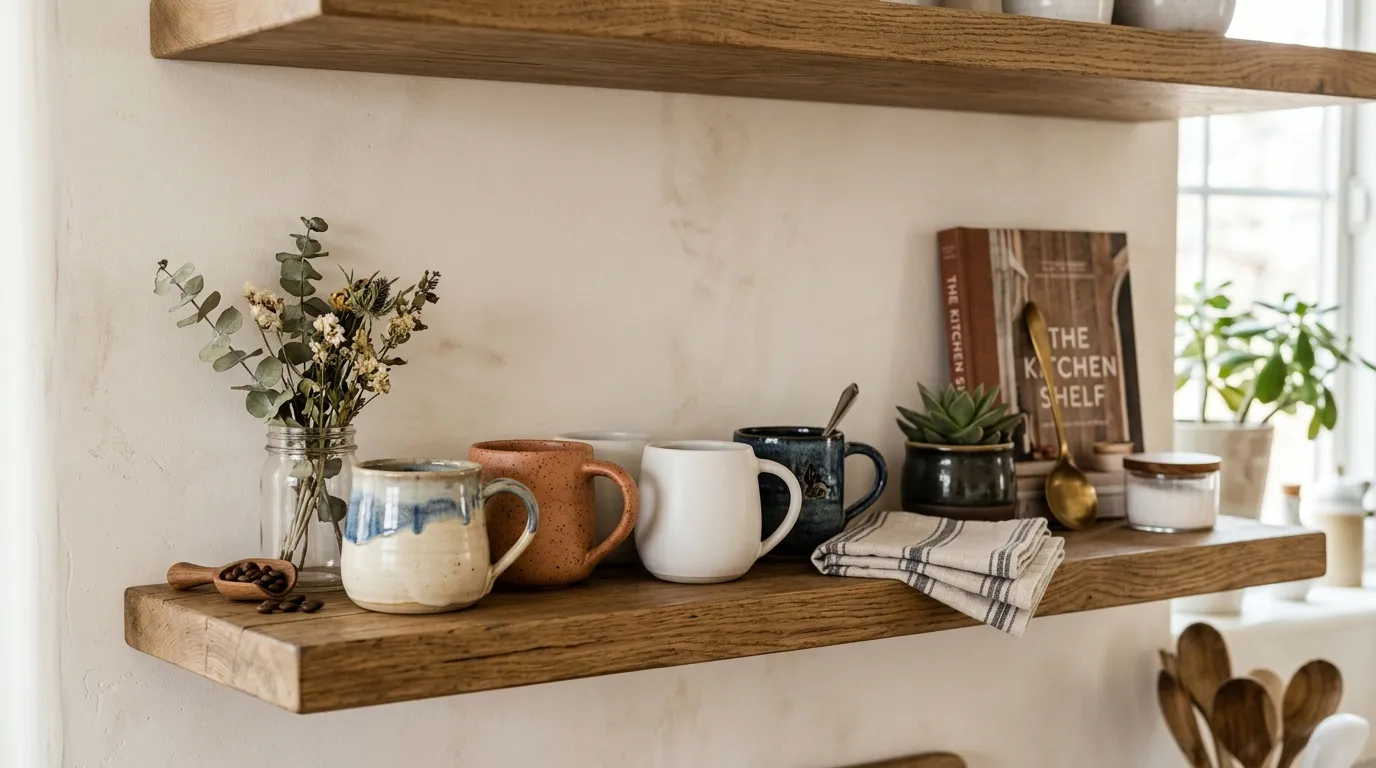
The Anatomy of a Lived-In Open Shelf: Styling with Mugs & Everyday Objects
03/10/2026
Forget the hyper-curated, sterile shelves of social media where every object looks like it belongs in an untouched museum gallery. Real home aesthetics aren't built on untouchable perfection; they thrive on the artful arrangement of things you actually use every day.
An open shelf in your kitchen or coffee corner should be a functional canvas—a place where utility meets personality. Here is how to turn your daily mugs, cookbooks, and everyday objects into a living, visual story.
1. The Rule of Tonal Anchors & Varied Heights
A common mistake in shelf styling is placing objects of equal height right next to each other, creating a monotonous, flat line.
To create movement, build visual pyramids:
Stack, Don't Just Line Up: Group your everyday mugs in neat stacks of two or three on one side, paired next to a tall dripper pot or an upright wooden cutting board on the other.
Anchor the Ends: Place heavier, visually dense items—like a ceramic canister or a thick stack of recipe books—near the outer edges to "frame" the shelf.
Incorporate Organic Shapes: Balance the sharp geometric lines of mugs and shelves with an organic object—a trailing pot plant, a small round stoneware jar, or a uniquely shaped vase.
2. Mixing Textures: Ceramic, Wood, Glass, and Brass
Visual warmth comes from contrast. If every item on your shelf is white porcelain, the display will feel cold and clinical.
Bring your shelf to life by mixing materials:
MaterialWhat It AddsEveryday ExamplesRough Ceramic & StonewareEarthy, tactile depthHand-thrown coffee mugs, mortar and pestleWarm WoodOrganic warmth and groundingSmall wooden spoons, salt cellars, cutting boardsClear GlassLightness and airinessPour-over carafes, clear glass jars filled with coffee beansMetallic AccentsSubtle shine and contrastBrass coffee scoops, copper measuring cups, small metal tins
3. The Art of Positive and Negative Space
It is tempting to fill every square inch of open shelving, but density creates clutter, while deliberate spacing creates design.
The 70/30 Rule: Aim to fill about 70% of the shelf surface with items, leaving 30% as empty breathing room.
Group in Odd Numbers: Arrange small objects in clusters of three or five (e.g., two favorite mugs next to a tiny spice jar). Odd-numbered groupings naturally feel more relaxed and balanced to the human eye.
4. Functional Storytelling: Keep the Essentials Accessible
Styling shouldn't compromise your morning rhythm. Place your shelf elements based on frequency of use:
Eye Level / Lower Shelf: The items you touch every morning—your daily rotation of favorite mugs, the coffee bean canister, and the hand grinder.
Upper Shelf: Occasional items—seasonal serving bowls, decorative ceramic pitchers, or art prints framed behind glass.
When your everyday objects are placed with intention, simply reaching for your morning cup becomes part of the home's visual rhythm.
"The best-styled shelves don't look like a store display—they look like a quiet, beautiful moment paused in the middle of a well-lived day."